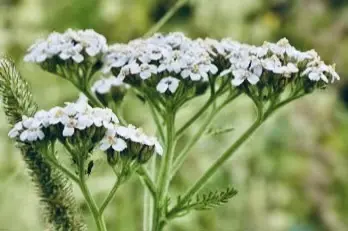
Yarrow Root Cuttings – Native Medicinal Plant for Edible Landscapes & Food Forests

  • USDA Zone
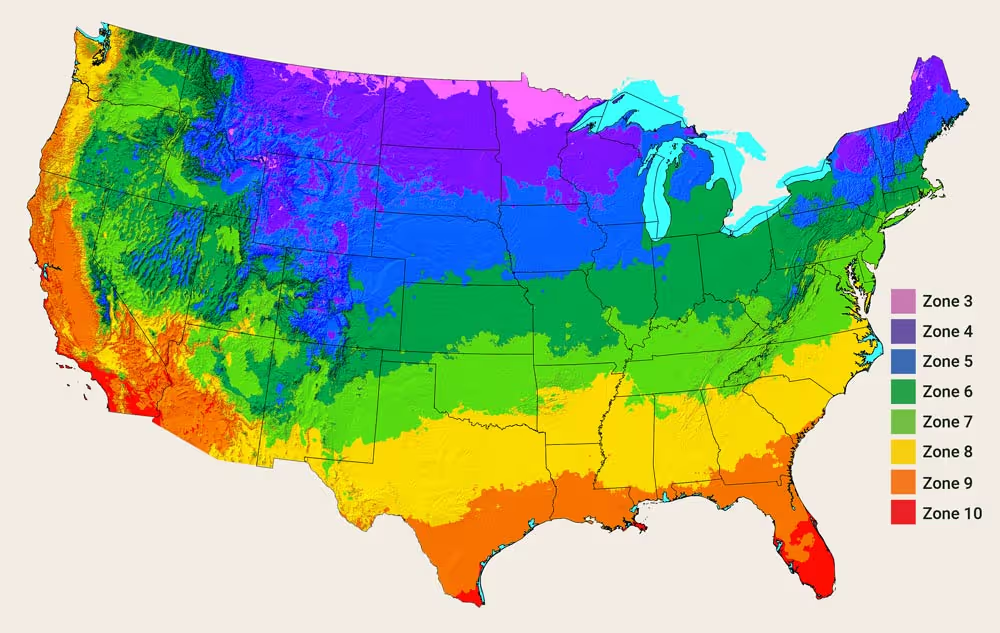
    3-9
  • Plant Layer
    Herbaceous
  • Native Range
    Throughout the U.S. and Canada
  • Life Cycle
    Perennial

Hardy native yarrow root cuttings for edible landscapes and permaculture food forests. Drought tolerant, pollinator friendly, and easy to establish.

$ 9.00 USD
In-Stock
Sold-Out

Yarrow

Achillea millefolium

Yarrow Root Cuttings – Native Medicinal Plant for Edible Landscapes & Food Forests

Yarrow Companion Plants for Fruit Trees & Edible Landscapes

Yarrow for Edible Landscapes & Permaculture Food Forests

Yarrow (Achillea millefolium) is a native perennial plant widely used in edible landscapes and permaculture food forests across North America. While not grown as a primary food crop, it is highly valued as a support species that improves soil health, attracts beneficial insects, and supports nearby fruit trees and perennial crops.

Our hardy white wild yarrow variety is an especially tough, resilient native strain. It was continually mowed for years, demonstrating exceptional durability, then allowed to grow out vigorously and mature within our apple tree food forest guild. Today, it thrives as a long-lived companion plant in a diverse orchard system, proving its adaptability and strength.

In permaculture food forests, yarrow is commonly planted as an understory or edge plant within fruit tree guilds. Its deep, fibrous root system helps improve soil structure and supports nutrient cycling, making minerals more available to surrounding plants. When cut back, yarrow can be used as chop-and-drop mulch, contributing organic matter and feeding soil life.

Yarrow is also a well-known medicinal plant with a long history of traditional herbal use. For centuries, the leaves and flowers have been used in teas, tinctures, and salves as part of traditional herbal practices. (Historical and educational reference only; not intended as medical advice.)

In edible landscaping systems, yarrow excels at attracting pollinators and beneficial predatory insects, including parasitic wasps and lacewings. These insects help reduce pest pressure naturally, making yarrow an effective companion plant for fruit trees, berries, and orchard plantings.

Because it is drought tolerant, low maintenance, and thrives in poor soils, yarrow integrates easily into:

  • Fruit tree guilds and orchard understories

  • Food forests and perennial polycultures

  • Native plant and pollinator gardens

  • Regenerative, low-input edible landscapes

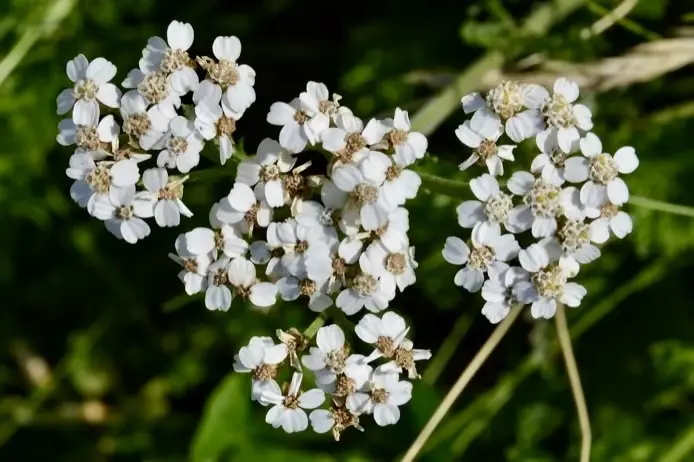
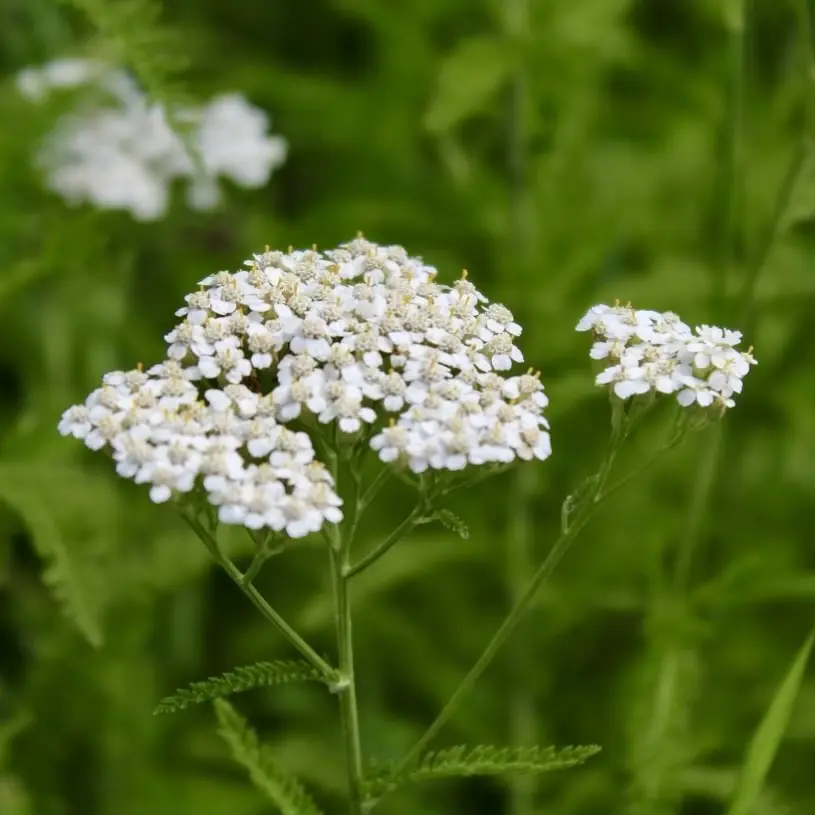
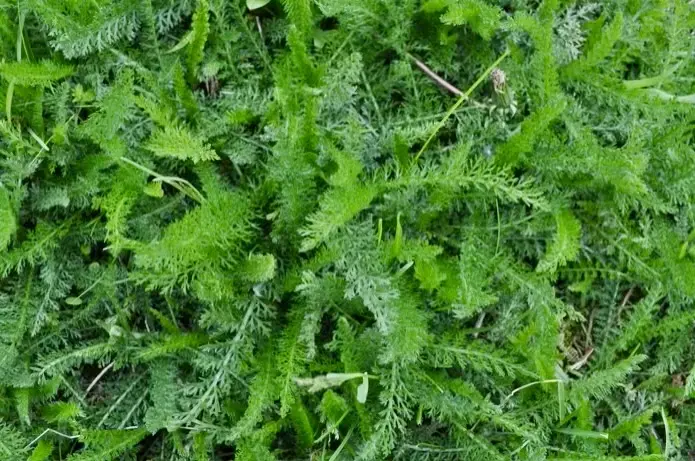
Its fine, fern-like foliage and long-lasting white blooms add ornamental value, making this native yarrow ideal for edible landscapes that balance beauty, resilience, biodiversity, and ecological function.
White Yarrow Traits & Qualities

  • Botanical Name: Achillea millefolium

  • Other Common Names: Common Yarrow, Milfoil, Soldier’s Woundwort

  • Type: Perennial herb

  • Growth Habit: Upright, clumping with slow spreading via rhizomes

  • Native Range: North America (also native to parts of Europe and Asia)

  • USDA Zone Range: 3–9

  • Mature Height: 1–3 feet

  • Bloom Color: White (flat-topped flower clusters)

  • Foliage: Fine, fern-like, aromatic green leaves

  • Pollinator Value: Excellent—attracts bees, butterflies, and beneficial predatory insects

  • Soil Preference: Well-drained soils; tolerant of poor and compacted soils

  • Sun Exposure: Full sun to partial shade

  • Moisture: Low to moderate; drought tolerant once established

  • Spacing: 12–18 inches apart

  • Life Span: Long-lived perennial; returns year after year

  • Growth Rate: Moderate to fast once established

  • Harvest & Use: Foliage and flowers traditionally harvested for herbal use, chop-and-drop mulch, and beneficial insect support

Yarrow

USDA Zone

3-9

Yarrow

USDA Zone

3-9

Yarrow Planting Guide

  • Sun Requirements:
    Performs best in full sun but tolerates partial shade.

  • Soil Preference:
    Thrives in well-drained soils and performs well in poor, rocky, or compacted ground where other plants struggle.

  • Water Needs:
    Low water requirements once established. Avoid consistently wet or waterlogged soils.

  • Spacing:
    Plant root cuttings 12–18 inches apart to allow room for clumping and natural spread.

  • Growth Management:
    Yarrow spreads slowly and responds well to mowing, trimming, or harvesting. Regular cutting encourages compact growth and prevents excessive spreading.

  • Food Forest Placement:
    Ideal for orchard understories, tree guild edges, pathways, and pollinator zones where durability and low maintenance are desired.

  • Cold Hardiness:
    Extremely cold hardy and reliable in USDA Zones 3–9.

Yarrow Nutritional & Medicinal Benefits

  • Vitamins A & C:
    Traditionally noted for supporting skin health and the body’s natural immune response.

  • Minerals (including potassium and calcium):
    Present in small amounts and historically associated with overall plant nutritive value in herbal traditions.

  • Flavonoids:
    Naturally occurring plant compounds studied for their antioxidant properties and role in supporting normal inflammatory responses.

  • Volatile Oils (including azulene and cineole):
    Historically valued in herbal practices for aromatic and soothing qualities.

  • Antioxidant Compounds:
    Yarrow has been studied for antioxidant activity, which may help protect cells from oxidative stress. (Educational reference only.)

  • Traditional Medicinal Uses:
    Yarrow has a long history of traditional herbal use for external applications, including support for insect bites, stings, minor skin irritations, and wound care. It has also been used historically in teas and preparations for digestive comfort and general wellness. (Historical and educational reference only; not intended as medical advice.)

Yarrow

FAQ

Is yarrow a native plant?

Yes. Yarrow (Achillea millefolium) is native to much of North America and has naturalized widely across the continent. It is commonly found in meadows, pastures, roadsides, and open woodlands and is well adapted to a wide range of climates and soil conditions.

Is yarrow considered a medicinal plant?

Yes. Yarrow has a long history of traditional medicinal use in herbal practices around the world. Historically, the leaves and flowers have been used in teas, salves, and poultices. These uses are provided for educational and historical purposes only and are not intended as medical advice.

Can yarrow be used for insect bites and stings?

Traditionally, fresh yarrow leaves were crushed and applied externally as a folk remedy for insect bites, stings, and minor skin irritations. This practice has been documented in many herbal traditions. Always research proper identification and preparation before using any plant medicinally.

Is yarrow good for edible landscapes?

Absolutely. Yarrow is widely used in edible landscaping as a functional perennial that adds beauty while supporting nearby food-producing plants. It pairs well with fruit trees, berries, and perennial vegetables and fits seamlessly into ornamental-edible designs.

How is yarrow used in permaculture food forests?

In permaculture food forests, yarrow is commonly planted as an understory or edge species within fruit tree guilds. It supports soil health, attracts beneficial insects, and provides biomass for chop-and-drop mulching, helping build long-term fertility in low-input systems.

What makes your yarrow variety especially hardy?

Our white wild yarrow variety has proven exceptional resilience. It was continually mowed for years, then allowed to grow out vigorously and mature within our apple tree food forest guild. This real-world selection process resulted in a tough, adaptable plant well suited for regenerative landscapes.

Does yarrow attract beneficial insects?

Yes. Yarrow is well known for attracting pollinators and beneficial predatory insects, including bees, lacewings, and parasitic wasps. These insects help support pollination and natural pest control in orchards, gardens, and food forests.

Will yarrow spread aggressively?

Yarrow spreads steadily but is not considered aggressively invasive when managed properly. It responds well to mowing, cutting, or harvesting and can be easily maintained in garden beds, orchard understories, and meadow plantings.

What growing conditions does yarrow prefer?

Yarrow thrives in full sun, tolerates partial shade, and prefers well-drained soil. Once established, it is drought tolerant, low maintenance, and performs well in poor or compacted soils.

Why choose root cuttings instead of seed?

Yarrow root cuttings establish faster and more reliably than seed, especially for food forest and orchard systems. Root cuttings produce genetically identical plants, ensuring you receive the same hardy, proven variety grown on our land.

Bare Root Shipping & Return Policy

We Ship Healthy Dormant Trees

At BearFruit Nursery, we make sure your bare root trees, shrubs, and plants arrive happy, healthy, and ready to grow. Orders ship in fall or early spring while plants are dormant to reduce transplant shock.

Here’s what to expect:
Your shipment may look like a “stick in the mud” — that’s normal!
You’ll receive a healthy, leafless plant with a moist, sawdust-wrapped root system.
The sawdust keeps roots from drying out and supports long-term growth.
Our plants are grown in soil, not pots, developing strong root systems that quickly outgrow container-raised plants.

If your order arrives damaged, incomplete, or not as expected:
Contact us within 14 days of delivery.
We’ll send a one-time free replacement if available, or issue a full refund if it’s out of stock.
Our goal is simple — to send you strong, healthy plants that thrive once in the ground.
"Everything was fine with our order."
- Jerri S. Maine
"All four trees in our order look good and planted."
- Patti K. Illinois

Customer Reviews

Grow More Bare Root Fruit Trees & Shrubs

Naturally Grown Cold Hardy Plants
At BearFruit Nursery we are driven by our passion to steward our land in a manner that allows us to care for people and generate abundant harvests. We never use pesticides or herbicides on our plants. Our inputs include locally sourced wood chip mulch and grass mulch, leaf mulch, and compost that we collect on our site. We grow our plants outside in the ground or in raised beds.
Learn More